MENU
DuPage County Advertising Guide

Indoor Billboard vs Social Media Ads & Google Ads in DuPage County

A practical buyer guide for local businesses deciding where to put their advertising budget — and which channel actually builds real-world visibility and trust.

Side-by-Side Comparison

Indoor Billboard vs Social Media & Google Ads: At a Glance

A clear look at the key differences that affect your advertising results in DuPage County.

Factor Indoor Billboard Social Media / Google Ads
Attention Environment Low-distraction, real-world venue High-distraction, crowded feed or search page
Interruption Level Ambient — part of the environment Interruptive — inserted into content
Ad Fatigue Low — venue-context novelty High — banner blindness, skip habits
Click Dependency None — exposure-based Required for most campaign ROI measurement
Local Audience Context Physical — inside local venues Digital targeting — still inside app/browser
Repeat Exposure Built-in — venue regulars return weekly Requires ongoing budget to maintain
Trust-Building High — community presence, repetition Lower — digital ads carry skepticism
Cost Pressure Over Time Stable — fixed venue placement Rises with competition and bid auctions
Pricing Comparison

Cost-Per-Impression: What You Actually Get

Digital ad platforms measure impressions in fractions of a second. Indoor billboard advertising measures exposure in minutes. The comparison is about attention quality, not just volume.

Indoor Billboard Advertising

  • Exposure-based pricing

    You pay for venue placement — not per click, not per algorithm impression. Your message runs on a consistent schedule regardless of whether someone taps a screen.

  • 30–90 minutes of venue dwell time

    Your message reaches customers who are present and stationary — not mid-scroll. A single visit creates multiple impression cycles at no additional cost.

  • No auction pressure

    Indoor billboard costs don’t rise when a competitor outbids you. Your placement is yours for the duration — predictable spend, predictable exposure.

  • Repeat-visitor compounding

    Regular venue guests return weekly or monthly. Each return visit is another exposure — building the familiarity that drives real purchase decisions over time.

Social Media & Google Ads

  • Click and impression costs vary by competition

    Paid digital ad costs are determined by auction dynamics. When competitors enter the same keywords or audiences, your costs rise — often significantly — without any change in what you’re offering.

  • Impressions ≠ attention

    Digital platforms count an impression when an ad appears on screen — even for a fraction of a second. Most are scrolled past, skipped, or ignored before the viewer registers the brand.

  • Ongoing budget requirement

    The moment you pause a Google or social campaign, visibility stops immediately. There is no residual recognition — every period of exposure requires continuous spend.

  • Creative fatigue and ad blindness

    Digital audiences develop habitual blindness to ad formats. Creative refreshes, A/B testing, and ongoing management are required just to maintain baseline performance — adding cost and complexity.

Actual pricing varies by campaign, targeting, geography, creative, and duration for both formats. The relevant question is which channel delivers more attentive, local exposure per dollar — over a sustained period of time.

Ad Fatigue & Distraction

Why Digital Ads Face an Attention Crisis

Banner blindness is real and well-documented. Digital audiences have developed automatic filtering behaviors that block most ads before they register — on social feeds, search result pages, and display networks alike.

Ad fatigue compounds this: the more often a user sees the same ad format in the same context, the faster they tune it out. Maintaining digital ad performance requires continuous creative refresh, ongoing management, and escalating budgets just to stay visible.

Indoor billboard advertising operates in a different attention environment entirely. A customer sitting in a venue for 45 minutes is not scrolling a feed, skipping a pre-roll, or ignoring a sidebar. They’re present. Your message is part of their real-world surroundings — not a digital interruption competing for a 1.5-second window.

Banner Blindness

Users instinctively ignore page areas where ads typically appear. This learned behavior applies across search results, social feeds, and display placements — reducing effective attention even when the ad technically loads.

Skipped Impressions

Social platform algorithms count an impression in milliseconds. But a scroll-past, a skipped pre-roll, or a dismissed notification is not the same as an attentive, absorbed message — the impression was counted, but the brand wasn’t seen.

Crowded Feeds & Search Pages

Every paid digital ad is surrounded by competitors — organic posts, other paid ads, and platform-native content all competing for the same limited attention window. Indoor billboard advertising appears in a controlled venue environment with far fewer competing messages.

Local Targeting

Digital Targeting vs Physical Presence

Social and Google Ads can target local zip codes and demographics — but they still deliver that message inside a crowded digital environment. Indoor billboard advertising reaches local customers physically, inside the venues where they already spend time.

How digital targeting works

  • Target by location, demographics, interests, and behavior inside a platform’s ad system
  • Reach the right person — but still inside a phone screen competing with dozens of other messages
  • Useful for specific campaign objectives: click-throughs, form fills, direct response
  • Requires continuous budget to maintain any level of exposure

How indoor venue targeting works

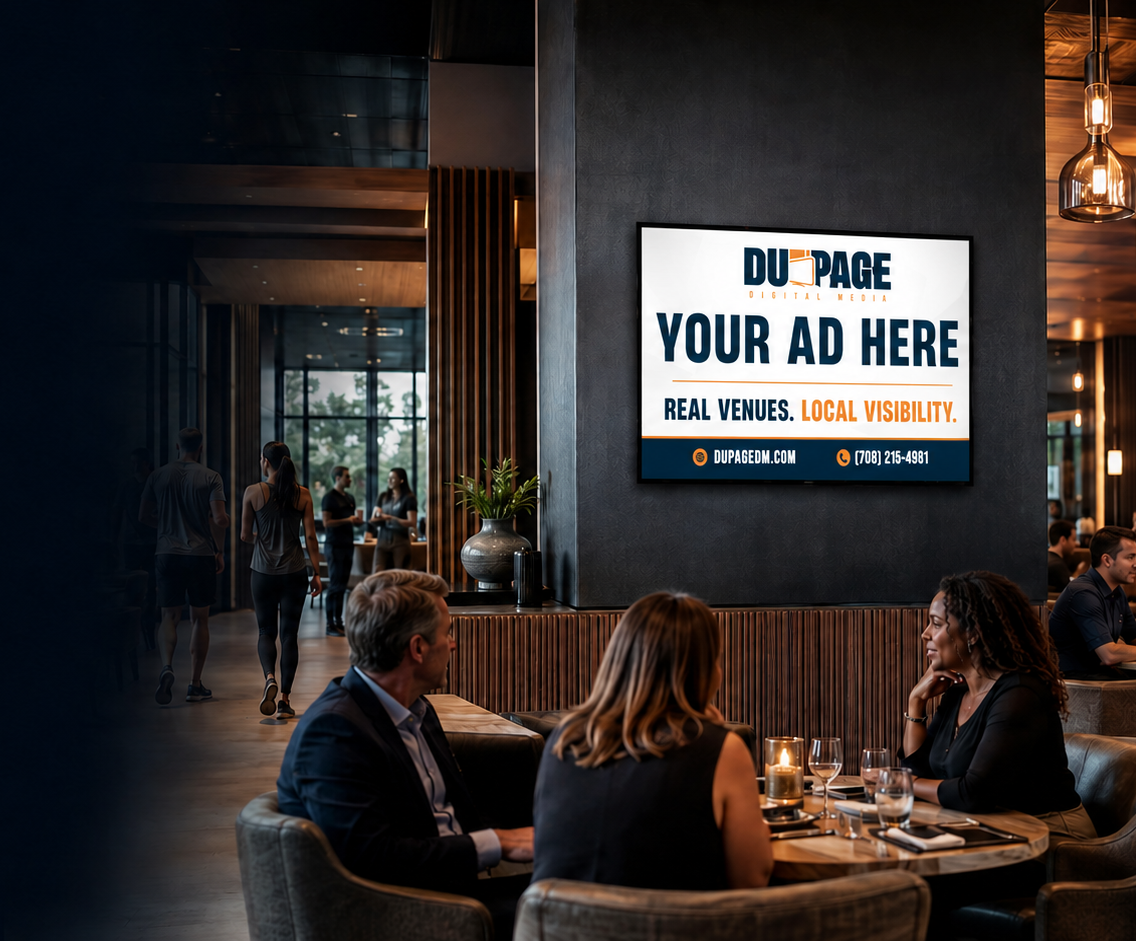
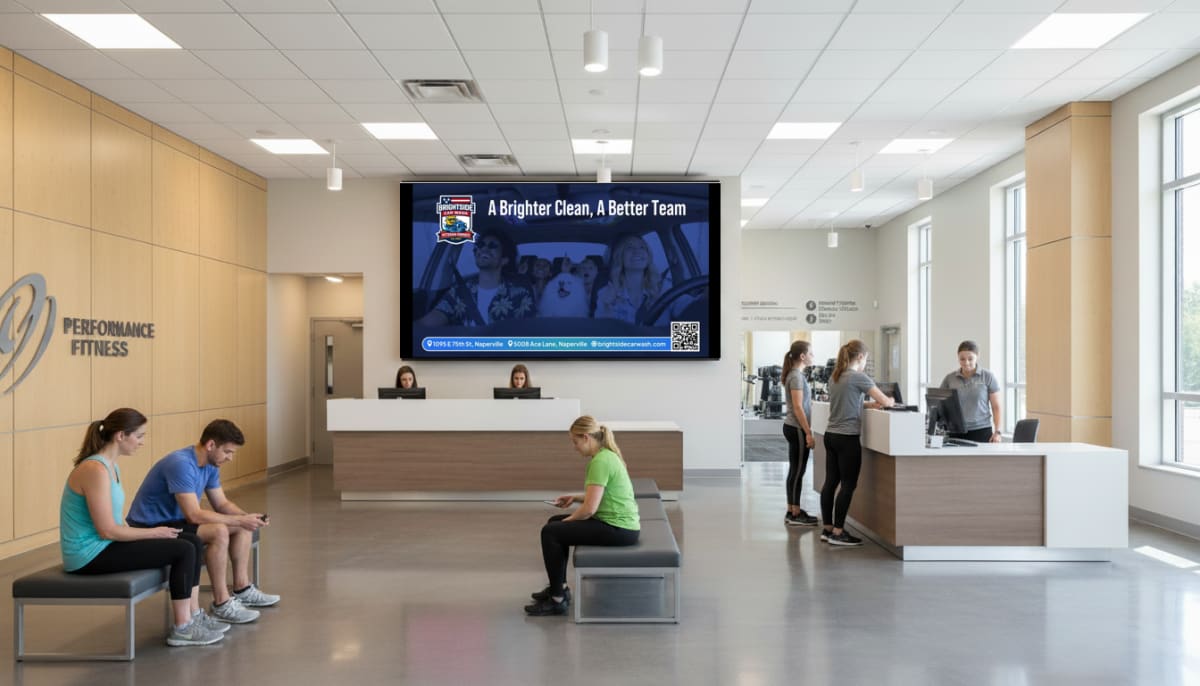
  • Reach local DuPage County residents physically inside restaurants, gyms, medical offices, and retail venues in Naperville, Wheaton, Downers Grove, Lombard, and surrounding communities
  • Your message appears in the real-world environment where customers already spend 30–90 minutes per visit — no phone required, no algorithm needed
  • Venue regulars return week after week, building compounding exposure to the same local audience at no additional cost
  • Community presence signals local investment — customers are more likely to trust and choose a business they’ve seen in their neighborhood
Best Fit Guide

When Indoor Billboard Advertising Wins

Indoor advertising consistently outperforms digital channels for businesses where local recognition, community trust, and repeated real-world exposure drive purchase decisions.

Healthcare & Dental

Trust matters more than clicks for healthcare providers. Repeated in-venue exposure builds the recognition that drives appointment bookings — especially in waiting rooms and wellness venues where health decisions are already on the mind.

Home Services

HVAC, plumbing, landscaping, and remodeling businesses thrive on local familiarity. Google Ads can capture search intent — but indoor billboard exposure creates the brand recognition that makes someone pick your name first when the need arises.

Legal & Financial Services

Attorneys, financial planners, and accountants need community trust — not just clicks. Indoor billboard presence in DuPage County venues builds familiarity with the exact local audience most likely to need professional services.

Restaurants & Cafés

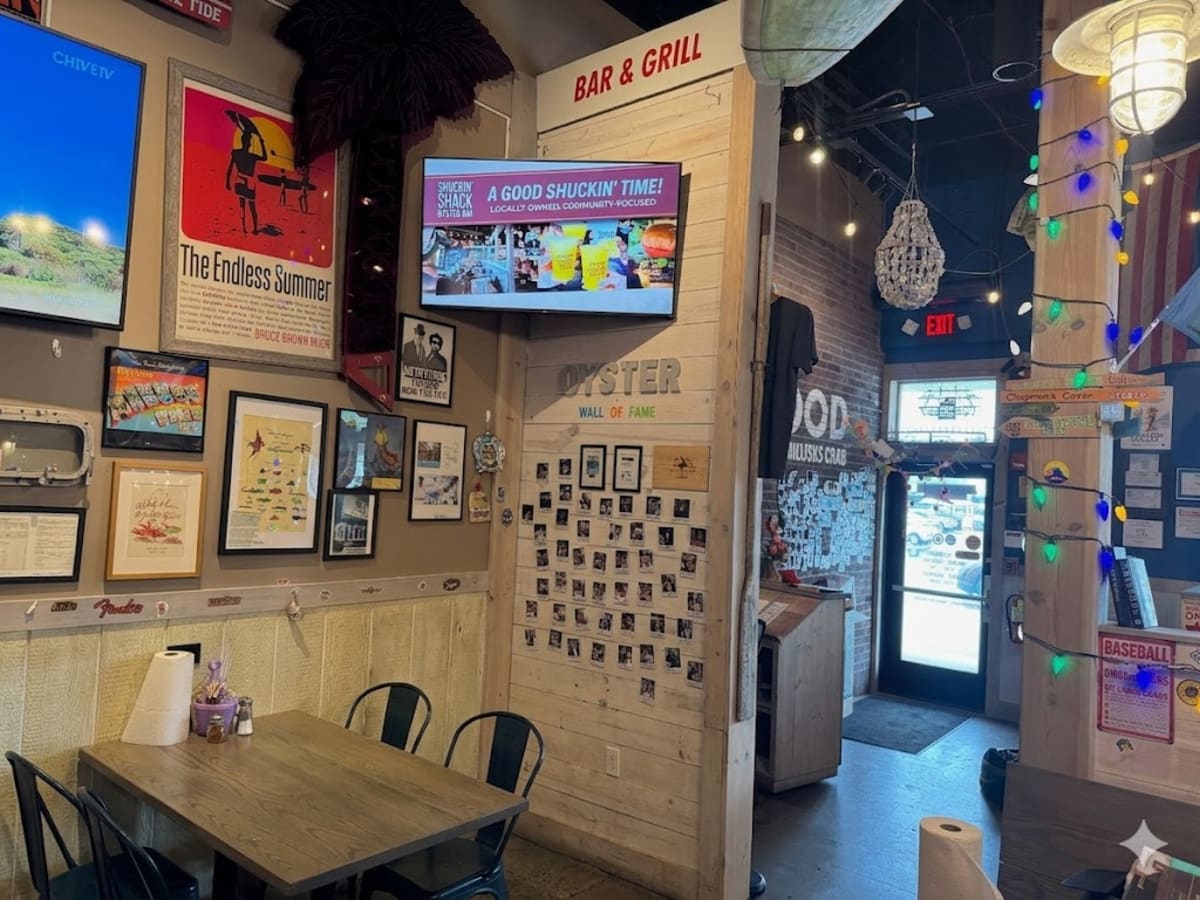
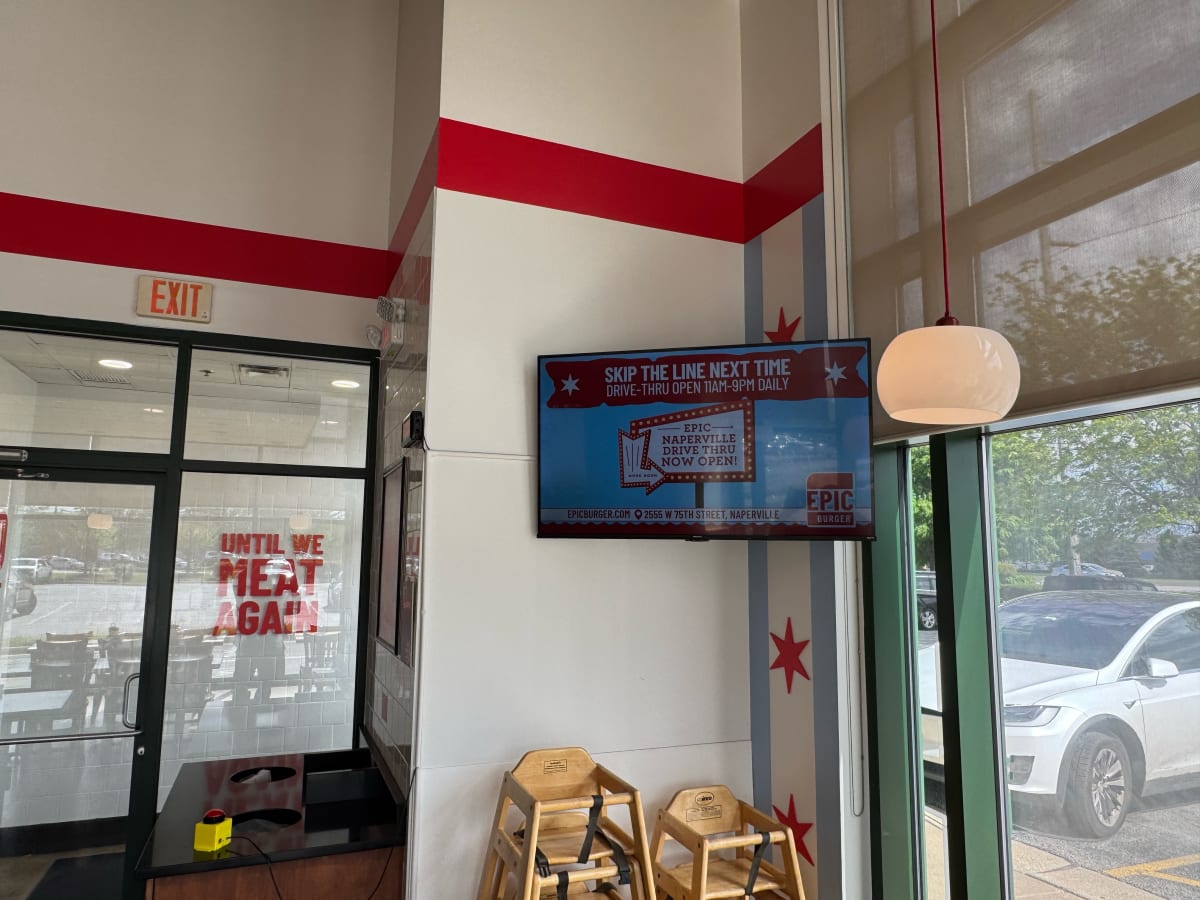
Diners follow familiarity. People deciding where to eat choose names they’ve seen recently. Indoor billboard exposure in local gyms, waiting rooms, and community venues puts your name in front of local residents repeatedly — long before they open a search app.

Fitness & Wellness

Health-minded audiences in gyms, studios, and wellness centers are already receptive to relevant local offers. Indoor advertising reaches them when they’re most engaged — in their preferred community venues, not mid-scroll on a social feed.

Local Retail & Services

Salons, boutiques, auto services, pet care, and any local business that depends on community recognition benefits from the sustained real-world presence that indoor billboard advertising creates in ways digital ads simply cannot replicate.

Fair Assessment

When Digital Ads May Make Sense

We believe in helping local businesses make the right call — and digital advertising does have genuine strengths worth acknowledging.

Where digital ads can help

  • Immediate click capture — Google Ads can intercept a search happening right now, driving direct response for time-sensitive offers or high-intent queries
  • Retargeting — social platforms can re-engage visitors who’ve already shown interest in your website or product
  • Campaign testing — digital ads allow fast A/B testing of offers, audiences, and messaging with measurable short-term feedback
  • Specific product launches — short-burst campaigns for new offerings, promotions, or events benefit from digital speed and targeting flexibility

Where indoor billboard has the strategic edge

  • Sustained local awareness — repeated community presence over months builds the top-of-mind recognition that makes digital advertising more effective when customers finally search
  • Trust that doesn’t require a click — familiarity from real-world exposure converts to preference and action without a campaign event or direct response moment
  • Predictable, competition-proof spend — indoor billboard costs don’t fluctuate with competitor bidding or platform algorithm changes
  • The channel that amplifies everything else — customers who recognize your brand from in-venue exposure are more likely to click your ad, choose your Google listing, or call your number

The strongest local marketing strategies use both. Digital ads capture demand in the moment — indoor billboard advertising creates the familiarity that makes your digital ads more effective when customers finally search.

DuPage County

A Smarter Alternative for DuPage County Advertisers

DuPage County’s local business community is competitive. Naperville, Wheaton, Downers Grove, Lombard, Glen Ellyn, Lisle, and surrounding communities are dense with businesses all competing for the same local customers — many of them running the same Google Ads and social campaigns through the same digital channels.

When every local competitor is bidding on the same keywords and targeting the same zip codes, the channel gets noisier and more expensive. Indoor billboard advertising sidesteps that competition entirely — placing your brand inside the physical venues where local customers actually spend time, in an environment those customers trust.

The businesses that build the strongest local presence in DuPage County are not always the ones spending the most on clicks. They’re the ones that show up repeatedly in the community environments where their customers live, work, and socialize — the restaurants, gyms, medical offices, and retail venues that define local daily life.

Active across DuPage, Kane, Will & Kendall Counties

Our venue network places your brand where local customers already spend 30–90 minutes per visit — not inside a phone screen they can close.

Amplifies your digital spend

Customers who already recognize your brand from in-venue exposure convert at higher rates when they see your digital ads or Google listing. Physical presence makes every digital dollar work harder.

Competition-proof local visibility

Your indoor billboard placement can’t be outbid on a Friday afternoon. Your venue spot is yours — consistent, predictable, and unaffected by competitor ad spend.

Community trust, not just traffic

Advertising inside local venues signals that you’re invested in the community. That credibility carries into every other customer interaction — online and off.

Ready to Switch?

Compare Your Current Digital Ad Spend to Indoor Billboard Advertising

If you’re currently running social media ads or Google Ads in DuPage County and wondering whether indoor billboard advertising could deliver better local results, we can walk you through the comparison — based on your specific goals, budget, and local coverage needs.

No commitment required. We’ll show you available venues, pricing, and what a realistic indoor billboard plan looks like alongside your current digital spend.

Frequently Asked Questions

Indoor Billboard vs Digital Ads: Common Questions

For sustained local brand recognition and community trust, indoor billboard advertising typically outperforms social media ads. Social media ads operate inside crowded, high-distraction feed environments where users are scrolling fast and ad fatigue is real. Indoor billboard advertising reaches local customers in real-world venues where they spend 30 to 90 minutes per visit — in a lower-distraction environment where your message has time to register and repeat. For businesses that rely on local familiarity and community trust to drive decisions, indoor advertising offers a more durable foundation.
Google Ads are effective for capturing immediate search intent — someone actively looking for a service right now. Indoor billboard advertising does something different: it builds the brand recognition that makes your business the familiar name when that search moment eventually happens. The two are complementary rather than identical alternatives. Google Ads work best when customers already know your name — and indoor billboard advertising is one of the most reliable ways to create that prior recognition in a local market like DuPage County.
Digital advertising — including social media ads and Google Ads — delivers messages inside digital environments (feeds, search pages, apps) that are high-distraction, high-competition, and algorithm-dependent. Indoor billboard advertising delivers your message inside physical venues — restaurants, gyms, medical offices, retail spaces — where local customers spend extended time in a lower-distraction setting. The core difference is attention quality: digital ads compete for a scroll-past; indoor billboard advertising reaches a customer who has nowhere else to be.
Indoor billboard advertising consistently delivers stronger local attention quality. Social media ads are served to users inside fast-moving feeds where the average scroll-past happens in under two seconds. Indoor billboard advertising reaches venue guests who are stationary for 30 to 90 minutes per visit — with your message cycling through their environment repeatedly during that time. The viewing context — relaxed, real-world, low-distraction — means each impression has a significantly higher chance of being noticed, processed, and remembered.
Paid digital advertising costs — on platforms like Google, Meta, or Instagram — are set by auction dynamics and vary based on competition, audience targeting, time of day, and campaign goals. Costs can rise quickly in competitive local markets as more advertisers bid on the same audiences. Indoor billboard advertising uses a different pricing model: venue placement for a defined period, with consistent exposure regardless of competitor spending. The more useful comparison is cost per attentive local impression — and when viewed through that lens, indoor advertising often delivers strong value for businesses focused on local brand recognition. Actual pricing for both formats varies by market, format, campaign duration, and targeting scope.
Yes. DuPage Digital Media operates an indoor digital billboard network across DuPage County, with venue placements in Naperville, Wheaton, Downers Grove, Lombard, Glen Ellyn, Lisle, and surrounding communities. The network also covers Kane, Will, and Kendall Counties. Contact us to see current venue availability and what a local indoor billboard plan looks like for your business and goals.
Switch to Indoor Billboard Advertising

See What Indoor Billboard Advertising Looks Like for Your Business

DuPage County venues available now No long-term commitment required

Also see: Advertiser Overview Indoor vs Outdoor Billboard DuPage County Advertising Home