MENU
Definitive Guide

What Is Indoor Digital Billboard Advertising?

A plain-language explanation of what indoor digital billboard advertising is, how it works, where it appears, and who it's designed for — with practical context for local businesses.

Indoor digital billboard advertising is a form of out-of-home advertising that places brand messages on digital screens installed inside local businesses — such as restaurants, gyms, medical offices, salons, and waiting rooms. Rather than competing for attention on a highway or a phone screen, these ads reach people who are already inside a physical location, often staying for 30 minutes or more. Advertisers run short looping content on these screens, gaining repeated exposure to a local, captive audience in a familiar, trusted environment.

How It Works

How Does Indoor Digital Billboard Advertising Work?

The mechanics are straightforward. An advertising company installs a digital display screen inside a participating local venue. Advertisers then purchase time on that screen. The advertiser's creative content — typically a short looping graphic or video — cycles through a playlist alongside other local advertisers. Because the screen runs continuously while the venue is open, each ad is seen many times throughout the day by the people present.

Simplified Ad Flow

Advertiser creates ad
Ad runs on screen inside venue
Customers see ad during visit
Repeated exposure builds recognition
Digital Screen Placement

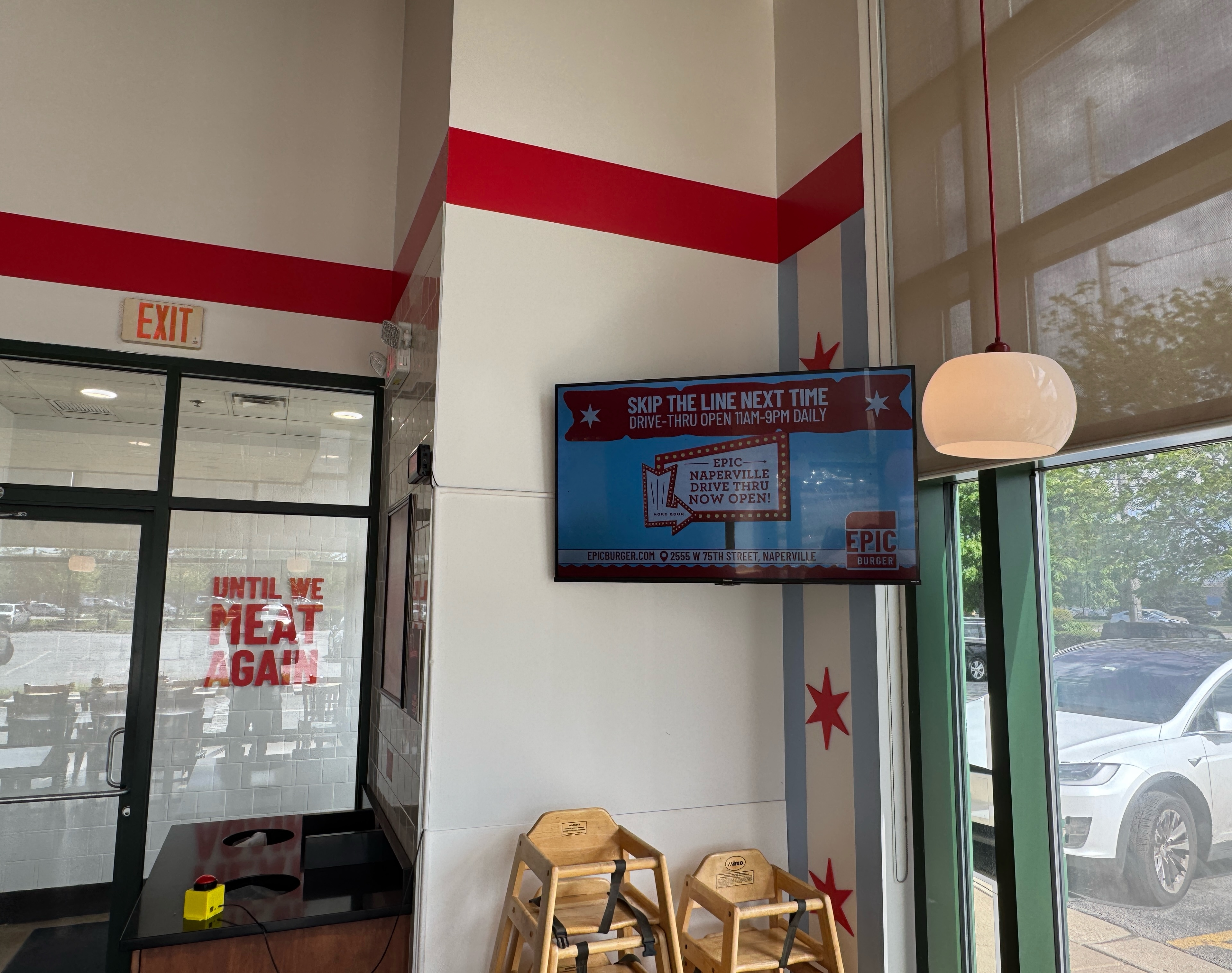
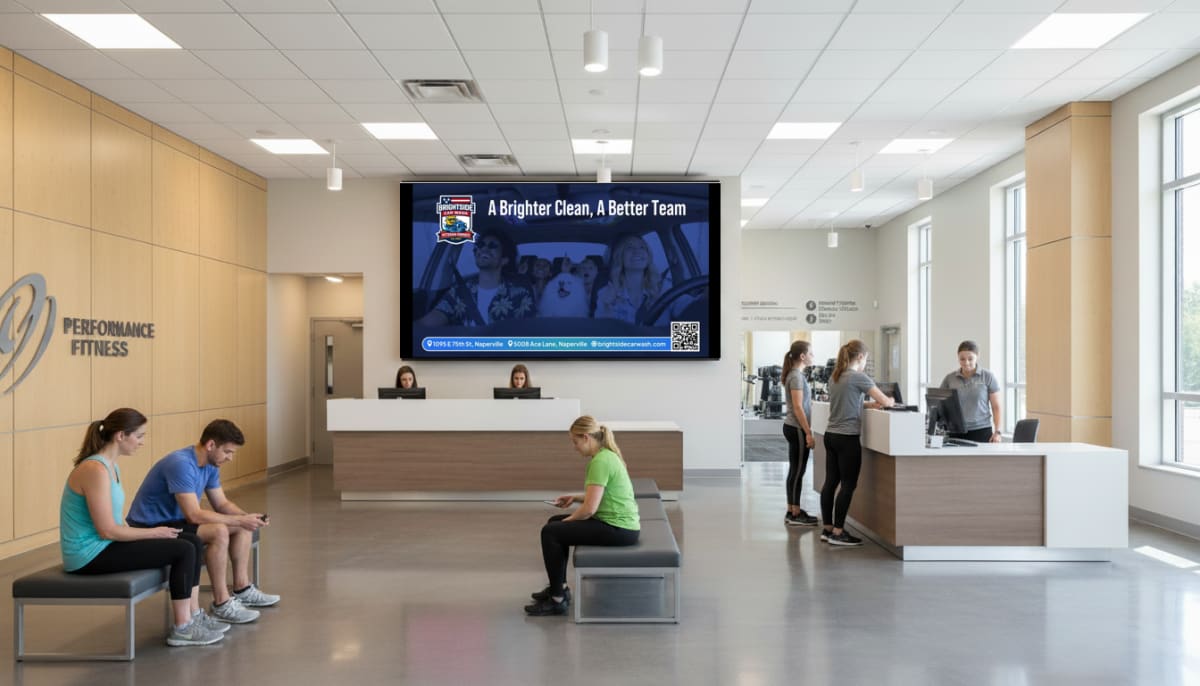
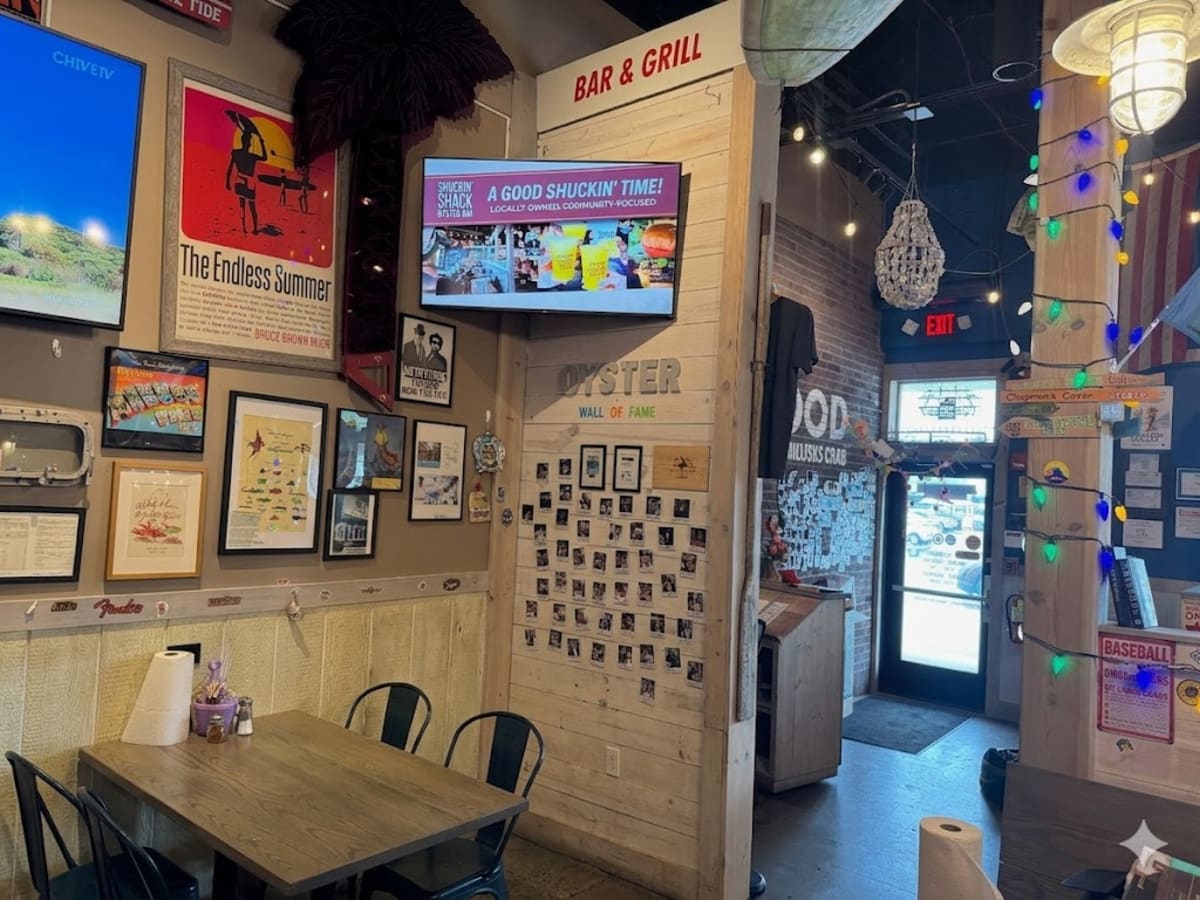
Screens are installed in high-traffic areas inside the venue — lobby walls, waiting areas, dining spaces, or near checkout points where people naturally look.

Rotating Ad Playlist

Your ad runs as part of a looping playlist. Depending on the total number of advertisers, your content typically plays multiple times per hour.

Dwell Time Advantage

People inside venues — waiting for an appointment, eating a meal, or finishing a workout — are stationary. That dwell time means they see your ad more than once per visit.

Venue Types

Where Do Indoor Digital Billboards Appear?

Indoor digital billboard screens appear in a wide range of local businesses. The common thread is that customers spend meaningful time in these spaces — not just passing through. Browse the DuPage Digital Media venue network.

Medical & Dental Offices

Waiting rooms are ideal — patients typically sit for 20 to 45 minutes before and after appointments.

Restaurants & Cafés

Dining guests spend 30 to 60 minutes at a table, making repeated exposure during a single visit entirely natural.

Fitness Centers & Gyms

Members visit frequently and stay for 45 to 90 minutes — high visit frequency compounds recognition over time.

Salons & Spas

Service appointments run 45 minutes to several hours, providing extended, uninterrupted ad visibility.

Retail & Specialty Shops

Shoppers browse at their own pace, giving screens in checkout areas or product displays extended contact time.

Professional Waiting Areas

Law offices, insurance agencies, auto service centers, and similar businesses all have seated waiting zones with captive attention.

Comparison

Is Indoor Digital Billboard Advertising the Same as Outdoor Billboard Advertising?

No. The two share the same root concept — placing a brand message on a screen people see — but they differ in context, audience, cost structure, and how exposure is created. Here's a direct comparison:

Factor Indoor Digital Billboard Outdoor Billboard
EnvironmentInside a local businessRoadside or public exterior
Audience dwell timeMinutes to hours per visitSeconds at highway speed
Audience selectionPeople inside a specific venue typeAnyone passing a given location
Repeat exposureMultiple views per visit, return visitsMultiple passes if on daily route
Local targetingSpecific neighborhoods and venue categoriesBroad geographic radius only
Production barrierLow — digital creative, easy to updateHigher — print production or large digital lease
Minimum commitmentOften accessible at local business scaleTypically larger commitments and budgets

How Is Indoor Digital Billboard Advertising Different from Social Media Ads?

Social media advertising and indoor digital billboard advertising operate on fundamentally different principles:

Social & Google Ads
  • ·Compete for attention in a distraction-heavy feed
  • ·Cost per impression rises as more advertisers bid
  • ·Require ongoing budget to maintain visibility
  • ·Audience may skip, scroll past, or use ad blockers
  • ·No physical environment context
Indoor Digital Billboard
  • ·Reaches people in a calm, distraction-reduced environment
  • ·Fixed-placement model — no bidding auction
  • ·Runs continuously while venue is open
  • ·Unskippable — the screen is simply present
  • ·Aligned with trusted local venue context

The two channels are not mutually exclusive. Many local businesses use indoor digital billboard advertising alongside social media and paid search — each channel reaches a different moment in the customer's awareness cycle.

How Does Indoor Digital Billboard Advertising Compare to Traditional In-Store Signage?

Traditional in-store signage — printed posters, window clings, menu boards — is static and changes slowly. Indoor digital billboard screens update instantly, can run time-sensitive promotions, display multiple advertisers in rotation, and can be changed remotely without a physical visit. The digital format also allows for more engaging motion graphics compared to flat print materials.

Core Benefits

What Are the Key Benefits of Indoor Digital Billboard Advertising?

For local businesses, the benefits center on how this channel creates brand recognition over time rather than a single click-or-convert event.

Repeated Exposure

People who visit the same gym, dentist, or restaurant regularly see your ad on every visit. Repetition over time builds familiarity — which is a precursor to trust and eventual action.

Local Targeting

Screens are placed in venues within your service area. You're reaching people who already live, work, or shop near your business — not a national audience you'll never convert.

Dwell Time

Unlike a highway billboard seen for two seconds, indoor billboard locations keep your audience present for extended periods. A dental waiting room visit alone may include three or more views of your ad.

Brand Recall

Consistent visual presence in physical spaces reinforces brand recognition that carries over when a customer later sees your Google listing, website, or social profile.

Hyper-Local Visibility

Indoor digital billboard advertising is inherently neighborhood-scale. You're not paying for impressions in areas you don't serve — placement is specific to venues near your business.

Trusted Environment

Ads shown inside a business the customer already trusts benefit from that association. There's no algorithmic hostility — no competing ad formats fighting for the same pixel space.

Fit Assessment

Who Is Indoor Digital Billboard Advertising Best For?

Indoor digital billboard advertising performs particularly well for businesses that rely on local, repeat customers and benefit from consistent brand recognition within a specific geographic area.

Strong fit
  • Local service businesses — HVAC, plumbing, landscaping
  • Medical, dental, and chiropractic practices
  • Restaurants, cafés, and food service
  • Real estate agents and mortgage brokers
  • Law firms targeting local clients
  • Fitness and wellness businesses
  • Retail shops with a neighborhood customer base
  • Automotive services and dealerships
  • Med spas, salons, and beauty services
  • Financial planners and insurance agents
Less typical fit
  • ·E-commerce businesses with no local service area
  • ·National brands seeking broad reach at scale
  • ·Businesses targeting a purely online audience
  • ·Products with zero local demand signal

Indoor digital billboard advertising is fundamentally a local channel. If your customers are in a specific city or county and you serve them in person, this channel can support awareness in ways digital-only channels cannot replicate.

Pricing Context

How Does Pricing Work for Indoor Digital Billboard Advertising?

Pricing structures vary by provider and market, but indoor digital billboard advertising is generally positioned as accessible at the local business scale — substantially more affordable than traditional outdoor billboard contracts or large paid media campaigns.

What typically determines cost
  • ·Number of screen locations
  • ·Venue categories and foot traffic levels
  • ·Campaign duration
  • ·Creative production (if provided)
What's typically included
  • ·Screen placement and management
  • ·Ad scheduling and rotation
  • ·Creative guidance or production
  • ·Campaign reporting
How to evaluate cost

Compare total monthly cost against the estimated number of impressions delivered, factoring in dwell time and venue visit frequency — not just raw eyeball counts.

For specific pricing relevant to the DuPage County market, reach out directly — rates depend on the number of locations, your target venue types, and available inventory in your area.

Ready to get visible?

Build a presence your community actually remembers.

Indoor digital billboard advertising is one piece of a coordinated local visibility strategy. See how DuPage Digital Media helps local businesses build recognition, trust, and revenue — together.

Let's Build My Growth Plan See the Full Visibility System
Multi-Channel Role

Can Indoor Digital Billboard Advertising Support Local SEO and Brand Recognition?

Indoor digital billboard advertising does not directly affect search engine rankings — it is a physical media channel, not a digital signal. However, it supports local SEO and brand recognition indirectly through a well-documented mechanism: brand familiarity.

Brand Recall and Search Behavior

When someone has seen your brand name in a physical space — a waiting room or a gym — they are more likely to search for you by name when they need your service. Branded search queries are a positive signal to search engines and tend to convert at higher rates.

Google Business Profile Reinforcement

A prospect who has seen your ad indoors is more likely to click through your Google Business Profile, read your reviews, and take action. Physical familiarity makes online discovery more credible. See GBP optimization services.

Multi-Channel Recognition

Customers who encounter your brand across multiple contexts — indoors, on social media, and in search results — develop stronger recall than those who see it in a single channel. Consistent multi-channel presence reinforces your local market position. See the Local Market Dominance System.

AI Search and Brand Mentions

As AI-powered search tools synthesize local business recommendations, brand familiarity and consistent identity across digital properties become more valuable. Indoor billboard advertising is one component of building that consistent local presence. Learn about AI SEO for local businesses.

Common Misconceptions

Common Misconceptions About Indoor Digital Billboard Advertising

"It's just a TV screen with ads."

Indoor digital billboard screens are purpose-built advertising displays, not repurposed televisions. They are managed remotely, run advertiser-specific content on a scheduled rotation, and are placed in high-visibility spots within the venue — not competing with programming or content.

"People ignore ads they see passively."

Passive exposure is actually how most brand recall is built. People do not need to actively engage with an ad for it to register. Repeated exposure in a low-distraction environment is more effective at building recognition than a high-volume digital feed that users scroll through quickly.

"Only big brands can afford it."

Indoor digital billboard advertising was designed, in part, as a local-market channel accessible at small business scale. Unlike highway billboard contracts or national media buys, indoor placements can be structured for local advertisers with neighborhood-level budgets.

"It doesn't work without measuring clicks."

Click-through rate is a digital metric. Indoor billboard advertising is a physical channel measured by impressions, dwell time, and venue traffic — similar to how radio, print, or outdoor advertising has always been evaluated. Attribution can be tracked indirectly through branded search lift, call tracking, and customer surveys.

"Indoor billboard ads are the same everywhere."

Venue type matters significantly. A medical waiting room audience is demographically and behaviorally different from a gym audience. Thoughtful venue selection — matching your business category to the right venue context — substantially improves campaign relevance.

"It's only useful for brand awareness, not action."

While indoor billboard advertising primarily builds awareness and recognition, it absolutely supports action. Including a simple call to action — a phone number, a URL, or a specific offer — gives an engaged viewer a path to respond. Awareness and direct response are not mutually exclusive.

Key Context

Understanding Exposure in Indoor Digital Billboard Advertising

These figures are directional and vary by venue type, traffic levels, and screen placement — but they help illustrate why dwell time is such a distinctive attribute of this channel.

30–90
Minutes — typical customer dwell time per venue visit
~1,500
Ad plays per screen per month at a typical venue
Local
Audience confined to a specific neighborhood or community
Unskippable
No skip button, ad blocker, or scroll to bypass
FAQ

Frequently Asked Questions About Indoor Digital Billboard Advertising

What is indoor digital billboard advertising?

Indoor digital billboard advertising places your brand's message on digital screens inside local businesses — restaurants, gyms, medical offices, salons, and waiting rooms. Customers see your ad while they are already present in a specific physical location, typically for 30 minutes or more per visit. It is a form of out-of-home (OOH) advertising optimized for local, hyper-targeted markets.

How does indoor digital billboard advertising work?

An advertising provider installs digital display screens inside participating local venues. Advertisers create short looping content — graphic or video — which runs as part of a rotating playlist on the screen. The ad cycles throughout the day while the venue is open, delivering multiple exposures to customers who are present during their visit.

Where are indoor digital billboards located?

Indoor digital billboards appear inside a wide range of local venues: medical and dental waiting rooms, restaurants and cafés, fitness centers, hair salons, nail salons, spas, retail shops, auto service waiting areas, law office lobbies, and other businesses where customers spend sustained time. In the DuPage County and Naperville area, screens are placed in venues across residential and commercial neighborhoods where local customers already spend time.

Is indoor digital billboard advertising the same as outdoor billboard advertising?

No. Outdoor billboards are placed on roadways and highways and reach drivers passing at speed — typically giving a viewer 2 to 6 seconds of exposure. Indoor digital billboards are placed inside businesses where customers are seated or stationary for extended periods, often 30 to 90 minutes. The dwell time, audience context, and local precision of indoor advertising are fundamentally different from the broad-reach, quick-impression model of outdoor billboards.

How is indoor digital billboard advertising different from social media ads?

Social media advertising is a pull-based digital channel where users are actively on a device and your ad competes with content they want to see. Indoor digital billboard advertising is a physical, passive channel — the screen is present in the environment and your ad plays without the viewer needing to take any action. Social ads are skippable and subject to ad blockers; indoor billboard ads are not. The two channels complement each other: social media drives online engagement, while indoor advertising builds physical-world familiarity.

What kinds of businesses use indoor digital billboard advertising?

Local service businesses are the most common advertisers — HVAC, plumbing, and home services; medical and dental practices; restaurants and food businesses; real estate agents and mortgage brokers; law firms; gyms and wellness businesses; automotive services; salons and spas; financial planners; and insurance agents. Any local business that benefits from name recognition in a specific neighborhood or community is a natural fit for indoor digital billboard advertising.

Is indoor digital billboard advertising good for local businesses?

Yes, particularly for local businesses that serve customers within a defined geographic area and benefit from repeated brand exposure. Indoor digital billboard advertising creates visibility in the physical spaces where your target customers already spend time — creating recognition that carries forward when they need your service and begin searching online.

How long do people typically see indoor digital billboard ads?

Dwell time varies by venue type, but common ranges are: 20–45 minutes in medical and dental waiting rooms, 30–60 minutes in restaurants, 45–90 minutes in gyms and fitness centers, and 45+ minutes in salon and spa settings. Within a single visit, a customer in a busy venue may see your ad cycle through two to five times or more depending on the playlist length and ad frequency.

How does pricing work for indoor digital billboard advertising?

Pricing varies by provider and market. Key factors include the number of screen locations, venue categories, estimated venue traffic, and campaign duration. Indoor digital billboard advertising is generally positioned as accessible for local business budgets — more approachable than outdoor billboard contracts and structured around local, neighborhood-level campaigns. Contact DuPage Digital Media for specific pricing based on available inventory in your service area.

Can indoor digital billboard advertising support Google visibility and brand recognition?

Not directly — indoor billboard advertising is a physical channel that does not generate backlinks or digital signals. However, it supports brand recognition that influences online behavior. Customers who have seen your brand in a physical space are more likely to search for you by name (branded search), click your Google Business Profile listing, and engage with your reviews. This behavioral impact can support your overall local SEO and Google visibility indirectly. When combined with a strong Google Business Profile and consistent digital presence, physical brand exposure amplifies the effectiveness of your online marketing. See how this fits into a coordinated system on the Local Market Dominance System page.

Next Step

Ready to Put Your Brand Where Your Customers Already Are?

DuPage Digital Media installs and manages indoor digital billboard screens at local venues across DuPage County, Naperville, and surrounding communities. Reach customers in your neighborhood — on the screens they actually see.

Indoor billboard advertising works best as part of a coordinated strategy. Explore the Local Market Dominance System to see how all the channels fit together, or learn more about the billboard network itself.

Let's Build My Growth Plan View Venue Host Network

Serving businesses in Naperville, DuPage County, and throughout the Chicago western suburbs.