What Is Indoor Digital Billboard Advertising? The Complete Guide for Local Businesses
By DuPage Digital Media • Updated May 2026 • 15 min read
A practical, in-depth guide for local business owners in DuPage, Kane, Will, and Kendall Counties who want to understand how indoor digital billboard advertising works, who it helps, and how it fits into a real local marketing strategy.
Most local businesses are dealing with the same frustrating problem right now.
People are seeing fewer ads than ever before. They skip video ads in five seconds, scroll past social posts without reading them, and treat most banner ads as visual noise. Search results are crowded with competitors all bidding on the same keywords. And yet a business still needs customers to recognize its name before they are ready to buy.
That gap between "we're invisible" and "they already know us" is where most marketing budgets get burned without results.
Indoor digital billboard advertising solves this differently. Instead of interrupting someone on their phone, it places your business in front of local customers while they are already inside a trusted local venue — eating at a restaurant, working out at a gym, waiting at a medical office, or shopping at a retail location. No algorithm. No skip button. Just your brand, visible to real people in your community, multiple times a month.
This guide explains exactly what indoor digital billboard advertising is, how it works, and why it produces results that many digital channels simply cannot replicate for local businesses.
What Is Indoor Digital Billboard Advertising?
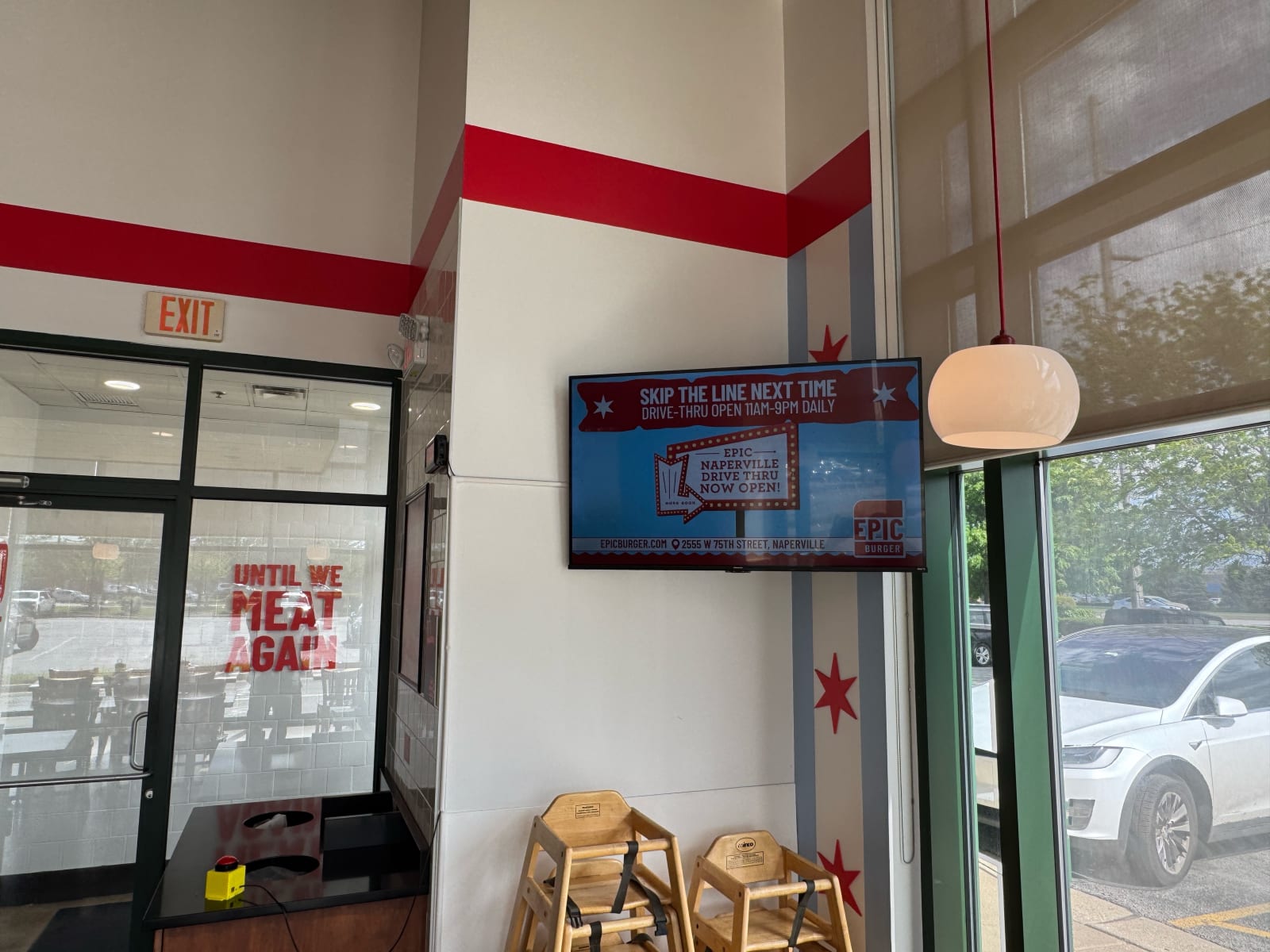
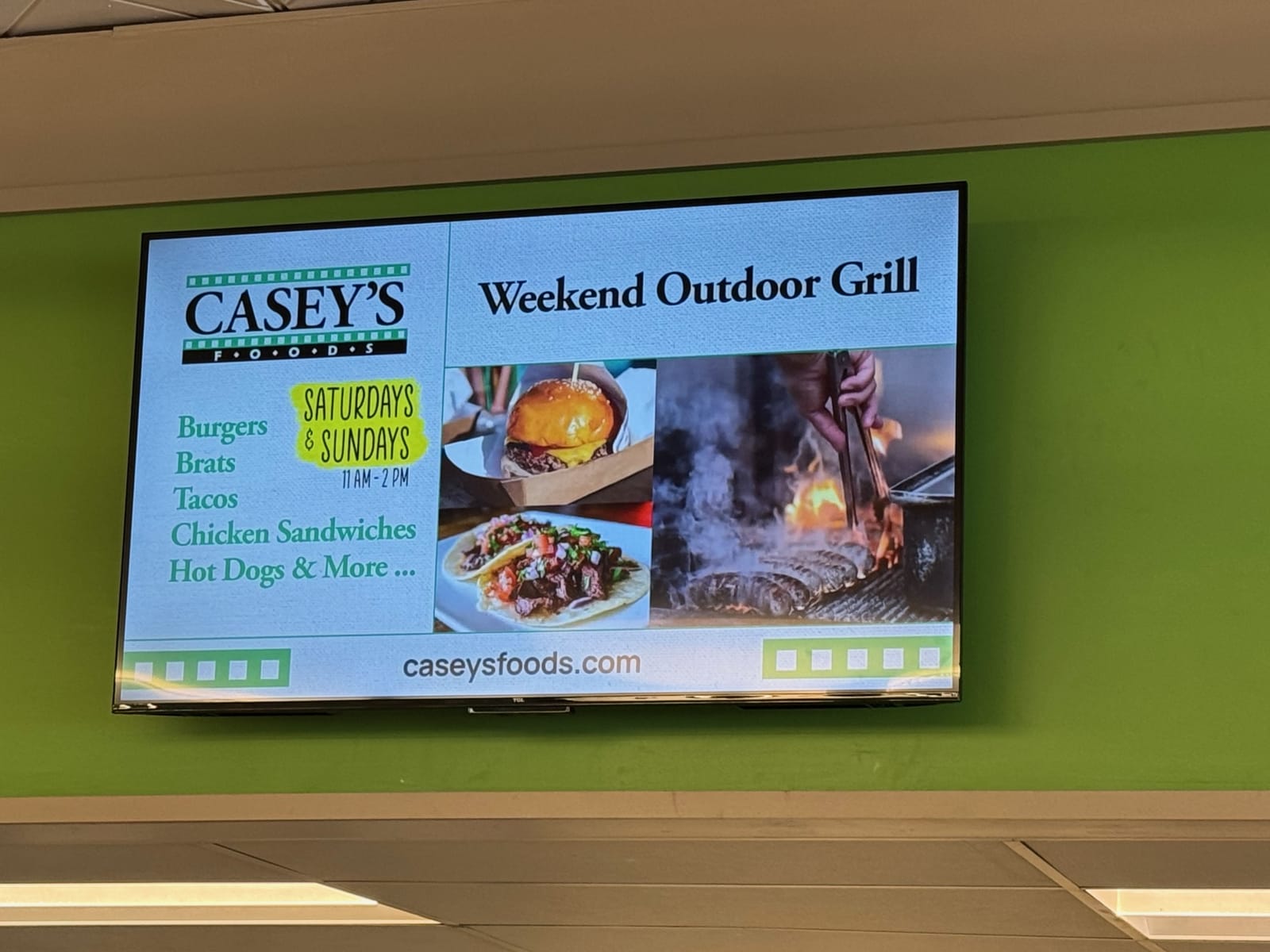
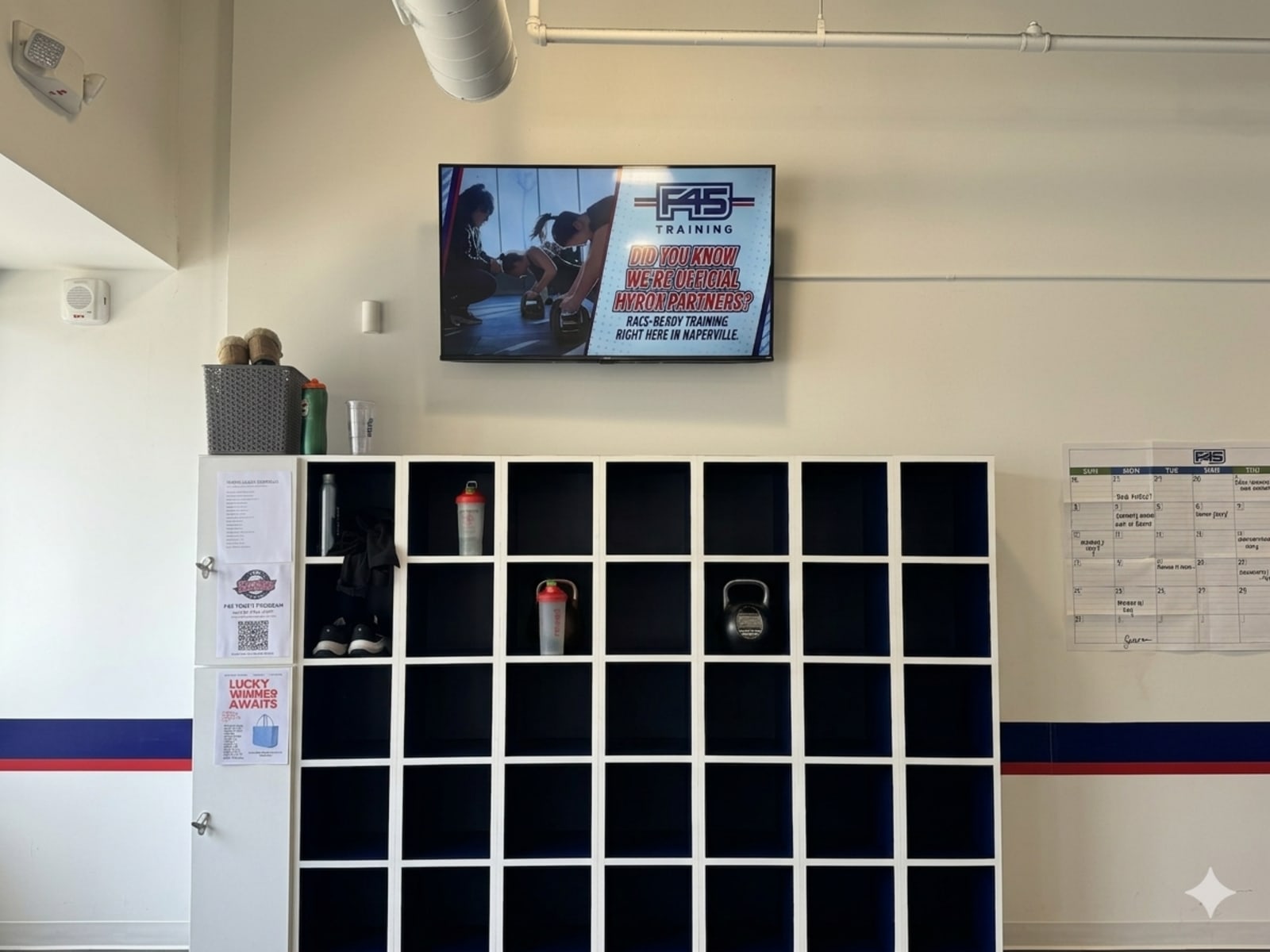
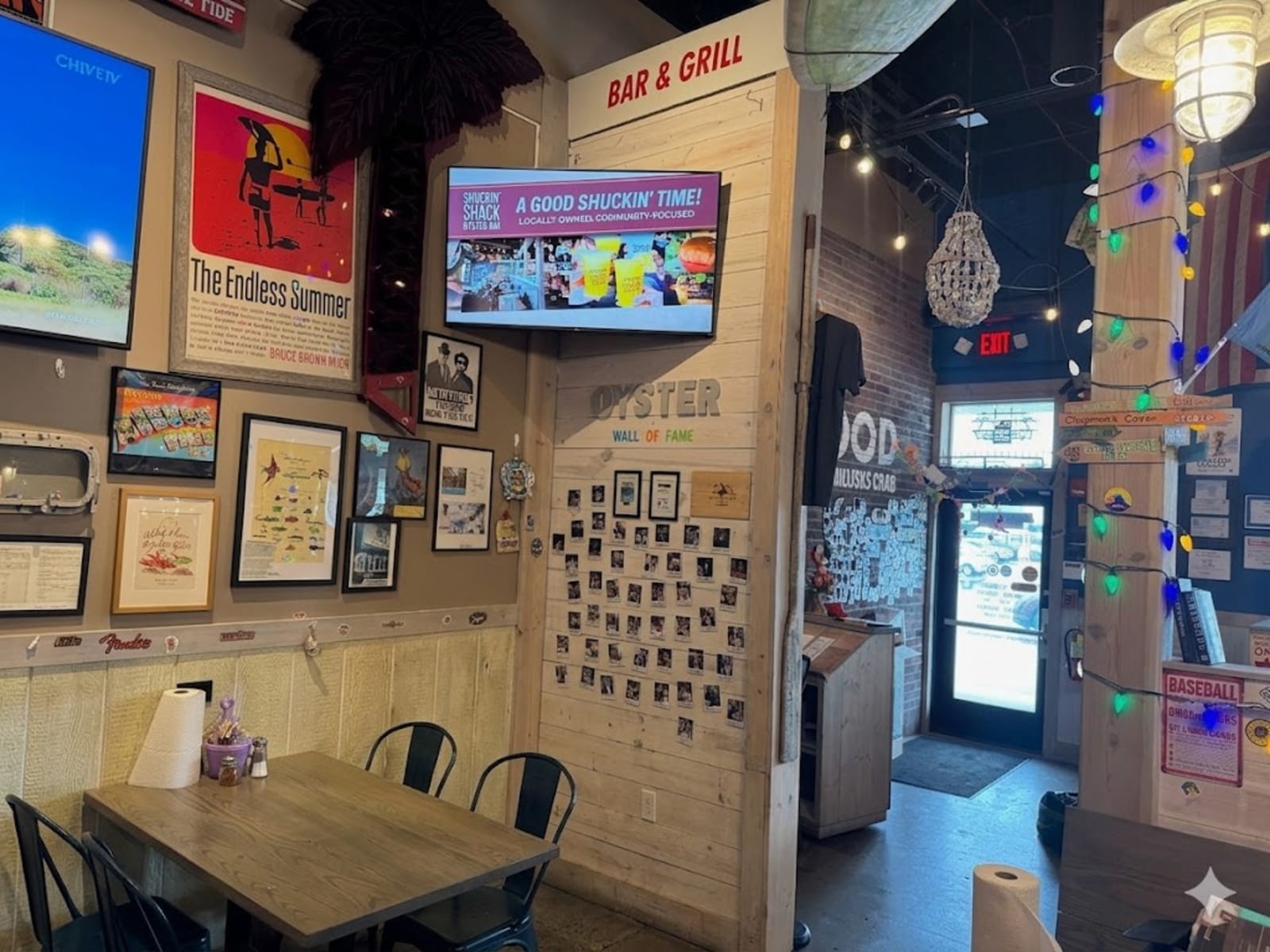
Indoor digital billboard advertising is exactly what the name suggests: digital screens, placed inside physical businesses, displaying advertisements to the customers who visit those locations.
The screens are professionally installed and managed inside high-traffic venues — restaurants, sports bars, gyms and fitness centers, medical and dental offices, retail locations, coffee shops, salons, and family entertainment venues. Businesses that want to reach local customers pay to advertise on these screens, and their ads rotate alongside content from other local advertisers throughout the day.
The key difference from online advertising is the environment. When someone is sitting at a restaurant in Naperville waiting for their food, or stretching after a workout at a gym in Wheaton, or waiting for an appointment at a medical office in Downers Grove, they are present and attentive in a way that someone scrolling a phone simply is not.
Definition
What Is Indoor Digital Billboard Advertising?
Indoor Digital Billboard Advertising places professionally designed advertisements on digital screens located inside trusted local businesses where customers spend meaningful time waiting, dining, exercising, shopping, or socializing. Unlike traditional online advertising, indoor advertising reaches people in distraction-free environments where attention is naturally higher.
For local businesses in DuPage, Kane, Will, and Kendall Counties, this means placing your brand in front of the exact residents who live and spend money in your community — people who shop in Naperville, dine in Geneva, work out in St. Charles, and run errands in Bolingbrook. The venue is the targeting mechanism. You know who is in a gym on a Tuesday evening. You know who is waiting at a pediatric office on a Thursday afternoon. That local specificity is something a digital ad platform cannot replicate with demographic sliders.
How Indoor Digital Billboard Advertising Works
The process is straightforward. Here is how a typical campaign comes together:
Choose your target market
You identify the communities and venue types where your ideal customers spend time. A dental practice in Lisle might focus on family venues and gyms. A financial advisor in Aurora might prioritize upscale restaurants and medical offices where their target demographic spends time.
Ads are designed professionally
Your creative is built for the screen environment: clear, readable at a distance, with a simple message and your brand's visual identity. DuPage Digital Media handles ad creation so the process requires minimal time from you.
Campaigns run across selected venues
Your ads rotate on the screens at each venue throughout the day, delivering approximately 1,500 plays per screen per month. The network is spread across Naperville, Wheaton, Downers Grove, Aurora, Geneva, St. Charles, and surrounding communities.
Customers repeatedly see your business
A gym member who visits three times a week sees your ad multiple times per visit. A restaurant regular sees it every Friday evening. A medical office patient sees it at each quarterly appointment. The repetition is built into the model.
Familiarity creates trust and future buying decisions
When a need arises — a tooth that needs attention, an HVAC system that fails, a decision to try a new attorney — your business is already the familiar name at the top of mind. That recognition converts to calls, visits, and bookings.
A practical example
An HVAC company in Naperville partners with DuPage Digital Media. Their ads run on screens at three local gyms and two restaurants across Naperville and Lisle.
Over the next three months, a homeowner who lives in the area visits their gym four days a week and eats at one of the partner restaurants twice a month. They see the HVAC company's name and phone number regularly, across different locations, without ever seeking it out.
In July, their air conditioning unit breaks down. It's 91 degrees. They don't Google "HVAC near me" and scroll through seven results they've never heard of.
They call the company they've been seeing for three months. The one that feels familiar.
That scenario plays out in dentist offices, law firms, restaurants, salons, and med spas across DuPage County every month. The advertising happened before the need existed. That is the model.
Why Indoor Digital Billboards Work Better Than Many Traditional Advertising Channels
Most advertising channels ask a lot from the audience. They ask people to stop scrolling, to watch a pre-roll ad they did not request, to click a banner they have learned to ignore, or to read a search ad they can tell is paid placement. The entire setup is adversarial — the advertiser wants attention, and the viewer is actively trying to avoid giving it.
Indoor digital billboard advertising works differently because the relationship between viewer and screen is not adversarial. The screen is part of the venue environment. It sits at eye level while customers wait, eat, work out, or relax. Attention is ambient and natural rather than forced.
Dwell time changes everything
The average social media ad receives roughly 1.7 seconds of attention before the viewer scrolls past. A highway billboard gets three to seven seconds from a passing driver. A pre-roll video ad is skipped in five seconds by most viewers.
Indoor venues create dwell times of 30 to 90 minutes per visit. A customer sitting at a restaurant for 50 minutes is not scrolling past your ad in two seconds — they are present in the same room as your brand for the entire meal. Your ad cycles through multiple times during that visit at no additional cost. The math on impressions per dollar changes completely.
Attention quality matters more than impression volume
Digital advertising platforms sell impressions. An impression is counted the moment an ad appears on a screen — including ads that load below the fold, ads that are immediately scrolled past, and ads blocked by browser extensions. The number looks impressive in a monthly report, but many of those impressions never reached a conscious viewer.
Indoor advertising impressions are real. A customer at a gym either saw your screen or they didn't — there is no bot traffic, no fraudulent impressions, and no above-the-fold versus below-the-fold distinction. The venue is the verification. That quality difference matters significantly when evaluating actual return on spend.
Repetition without fatigue
Regular venue visitors return week after week. A gym member sees your ad on Monday, Wednesday, and Friday for three consecutive months. Each exposure stacks. By the second month, your business is not an unfamiliar name — it is a recognized part of that person's weekly routine.
Digital advertising platforms suffer from ad fatigue — the same ad shown too many times to the same audience produces declining click rates and increasing costs. Indoor advertising in venue environments does not carry the same psychological burden because the exposure feels ambient rather than intrusive. The context makes repetition feel normal rather than annoying.
The Psychology Behind Local Brand Recognition
Understanding why indoor advertising works requires a short detour into how the brain actually makes purchasing decisions — because the mechanism is not what most people assume.
The mere exposure effect
The mere exposure effect is a well-documented psychological phenomenon, first researched extensively by Robert Zajonc in the 1960s. His finding was simple: people develop a preference for things they have seen before, just because they have seen them before. No positive experience required. No researched features or benefits. Just prior exposure.
This is why a business name that a customer has seen three or four times feels "safe" compared to a competitor they are seeing for the first time. The familiar name carries no perceived risk. The unfamiliar one does. In a competitive local market, that perceived safety often determines who gets the call.
How memory and familiarity drive local buying decisions
Most purchase decisions for local services happen outside of active research mode. A pipe bursts. Someone needs a haircut. A couple decides to try a new restaurant on a Friday night. A pet owner needs a new vet.
In those moments, people do not start with a blank slate and carefully evaluate five options. They reach for what is already in memory. The business whose name surfaces first — because they have been exposed to it recently, repeatedly, in real-world environments — gets serious consideration before the search begins.
This is called top-of-mind awareness, and it is why large consumer brands spend billions on advertising that does not ask for a click or a purchase. The goal is to be the name that people think of first when the need arises. Indoor digital billboard advertising builds that top-of-mind position for local businesses at a fraction of what national brand campaigns cost.
Trust built without a transaction
There is also a community signal embedded in local venue advertising. A business that is visible in the gyms, restaurants, and medical offices of a specific community sends an implicit message: we are invested here. We are part of this neighborhood. That local presence carries a trust signal that digital advertising — by definition geographically invisible and globally identical — cannot produce.
Who Benefits Most From Indoor Digital Billboard Advertising?
Indoor digital billboard advertising works well for most local businesses, but it is especially powerful for categories where trust, familiarity, and repeated exposure have a direct impact on customer acquisition decisions.
Restaurants and food and beverage businesses
The decision of where to eat is made up to 70 percent before anyone opens a search app. Diners go where they have been, or where they recognize the name from a previous exposure. Indoor advertising across Naperville and Downers Grove venues builds the name recognition that drives dinner reservations and carryout orders.
Fitness centers and gyms
Gym membership decisions are high-consideration and habit-driven. People visit gyms they have seen recommended or recognized, and they stay for months or years. Building visibility in the fitness community across Geneva, Wheaton, and surrounding areas creates a pipeline of warm prospects who already know your name before they walk in for a tour.
Medical practices and dental offices
Healthcare decisions are heavily trust-dependent. Patients choose providers they recognize and feel comfortable with — not random Google results. Advertising in local venues in Naperville, Lisle, and Aurora places a dental or medical practice in front of community members months before they need care, building the recognition that converts to new patient calls.
Attorneys and law firms
Legal needs are infrequent but high-stakes. When a DuPage County resident needs an attorney, they think of the name they recognize from their community. Google Ads for legal keywords are among the most expensive in local services. Indoor advertising builds that name recognition at a sustainable cost before the urgent need exists.
Home service companies
HVAC, plumbing, electrical, landscaping, and remodeling decisions are almost always made urgently — the system failed, the leak started, the project needs to begin. Homeowners call the company they already recognize. Building that recognition across Bolingbrook, Lisle, and Aurora gyms and restaurants puts your company name in the room before the emergency happens.
Veterinary clinics
Pet owners are deeply loyal to the clinics they trust — but they need to become familiar with that clinic first. New residents in Naperville or Wheaton choosing their first local vet will gravitate toward the name they have already seen in community venues over the past few months.
Real estate professionals
Homebuyers and sellers choose the agent they know. In a market like Naperville or St. Charles, the most recognizable local agent — not necessarily the most experienced — gets the referral. Indoor advertising maintains a consistent visible presence across community venues between listing periods.
Financial advisors and accountants
Financial service decisions require exceptional trust. Clients need to recognize and feel comfortable with an advisor before they will schedule an initial meeting. Community visibility in Naperville, Aurora, and Downers Grove venues builds the prior familiarity that makes the first conversation easier.
Local retailers and specialty shops
Independent retail faces constant competition from online alternatives. What it can offer that Amazon cannot is local presence and community belonging. Indoor advertising reinforces that local identity and keeps the store name in front of nearby residents between visits.
Indoor Digital Billboards vs Social Media Advertising
Social media advertising is a valuable tool for local businesses, particularly for direct-response campaigns and retargeting. But its strengths are different from indoor advertising, and the two channels serve different roles in a complete marketing strategy.
| Factor | Indoor Billboard | Social Media Ads |
|---|---|---|
| Attention per impression | 30–90 min dwell time | ~1.7 seconds average |
| Competitor presence | Category exclusive | Multiple competitors in same feed |
| Ad skipping | Not possible | Skipped or scrolled past |
| Trust signal | Community presence | Digital ad skepticism common |
| Local targeting precision | Physical venue (exact) | Zip/radius (algorithmic) |
| Brand recall after exposure | Higher (real-world context) | Lower (high-distraction feed) |
The two channels work well together. Indoor advertising builds the brand familiarity that makes social media retargeting more effective — because customers who have already seen your brand in a venue are more likely to engage with your social content when they encounter it later.
Indoor Digital Billboards vs Google Ads
Google Ads and indoor billboard advertising are not competing channels — they serve fundamentally different purposes in a marketing funnel. Understanding the difference helps local businesses decide how to allocate budget across both.
Google Ads are intent-based: someone searches for "emergency plumber Naperville" and your ad appears. The search intent tells you the person is actively in the market right now. Capturing that moment is genuinely valuable. But Google Ads can only capture demand that already exists — they cannot create it.
| Factor | Indoor Billboard | Google Ads |
|---|---|---|
| Marketing model | Awareness-based | Intent-based |
| When it works | Before the need exists | When need is active |
| Cost model | Flat placement fee | Auction-based, rises with competition |
| Creates new awareness? | Yes | No (requires active search) |
| Competes with zero direct competitors | Yes (exclusive) | No (multiple ads visible) |
The businesses that get the best return from Google Ads are the ones customers already recognize. Indoor advertising creates that prior familiarity, so when a customer searches and sees your name in results, it already feels familiar. That recognition lifts click-through rates and conversion rates at no additional cost to your search campaign.
How Indoor Advertising Supports Local SEO and Google Business Profile Performance
One of the less obvious benefits of indoor digital billboard advertising is its effect on online performance — specifically on how your business performs in local search results and on your Google Business Profile.
Here is the connection: when customers recognize your business from in-venue advertising, they are more likely to search for you by name. Branded searches — someone typing "Naperville dentist Dr. Smith" rather than just "dentist near me" — are a strong positive signal to Google. They suggest to the algorithm that your business is recognizable and trusted in the local area, which can support your ranking in local search results over time.
The offline-to-online recognition chain
A customer sees your HVAC company's screen at their gym three times in a month. Later, when their system makes a strange noise, they Google your company name directly. That branded search confirms to Google that real local people are looking for you by name — not just stumbling across a generic keyword result.
The same dynamic applies to Google Business Profile engagement. Customers who recognize your business from real-world exposure are more likely to click your profile, read your reviews, save your phone number, and ultimately leave a review after a service visit. All of these actions improve your profile's performance signals.
For businesses working on their local digital presence, pairing indoor advertising with Google Business Profile optimization creates a reinforcing cycle: outdoor recognition drives online engagement, and strong online engagement builds further trust. AI SEO strategies can extend this further by ensuring your business is the authoritative answer in local AI-powered search results as well.
Brand recognition amplifies every other marketing channel
This amplification effect extends beyond search. Customers who recognize your brand from indoor advertising are more likely to open your email newsletters, engage with your social content, respond to your direct mail pieces, and attend your events. The real-world familiarity does not stay in the venue — it transfers to every other touchpoint in your marketing ecosystem.
Frequently Asked Questions
Why Local Businesses Are Adding Indoor Advertising to Their Marketing Mix
The broader shift toward indoor advertising among local businesses in DuPage and surrounding counties comes down to a few consistent frustrations with digital-only strategies.
Google Ads costs for competitive local keywords have risen significantly over the past five years. Social media organic reach has declined to near zero for most business pages, making paid placement essentially mandatory. And paid social campaigns require ongoing creative refreshes, audience management, and continuous budget to sustain visibility.
Indoor advertising offers a different relationship with your audience. It does not require you to win an auction every day. It does not get blocked by an ad blocker. It does not disappear the moment you pause the campaign. It runs on a consistent schedule, in physical venues your customers already visit, and compounds over time as regular venue guests see your business again and again.
Attention is real
Venue customers are present for 30 to 90 minutes, not scrolling past in 1.7 seconds.
Repetition compounds
Regular venue visitors see your brand again and again. Familiarity builds automatically.
Competition-proof placement
Category exclusivity means your competitors are not visible in the same venue environment.
Local to the community
Venue-based targeting reaches the exact Naperville, Wheaton, Bolingbrook, or Aurora residents who are your customers.
The businesses adding indoor advertising to their mix are not abandoning digital channels. They are supplementing them with a layer of real-world visibility that digital alone cannot provide — the kind that turns a new resident in Naperville into a customer before they have even started searching.
How to Evaluate Indoor Advertising for Your Business
Before making any advertising decision, the most useful question to ask is: where are my customers before they decide to buy?
For most local businesses in DuPage, Kane, Will, and Kendall Counties, the honest answer is that customers are at gyms, restaurants, medical offices, and retail locations in the same communities where your business operates. They are spending time in those venues every week — weeks and months before they have an active need for what you offer.
If your business relies on local familiarity, community trust, and top-of-mind recognition to drive decisions — and most local businesses do — then indoor digital billboard advertising deserves serious consideration as a foundational part of your local visibility strategy.
The goal is not to replace the channels that are already working. It is to build the brand recognition layer that makes every other channel work better: more branded searches on Google, higher click-through rates on paid ads, more engagement with your social content, and more conversion from customers who arrive already knowing your name.
If you would like to learn how indoor digital billboard advertising can support your local marketing strategy, contact DuPage Digital Media for a complimentary visibility assessment.
Explore further
Indoor Digital Billboard Advertising Services
How DuPage Digital Media's network works for advertisers
Indoor Advertising in Naperville
Venues, coverage, and local availability
What Is Indoor Digital Billboard Advertising?
Plain-language explainer with FAQ
Google Business Profile Optimization
Pair offline visibility with online search performance
AI SEO Services in Naperville
Be the answer AI search engines recommend locally
Naperville Advertising Overview
Local advertising solutions for DuPage County businesses
See what indoor billboard advertising looks like for your business
We'll show you available venues in your market, what category coverage looks like, and how a realistic plan for DuPage, Kane, Will, or Kendall County would work.
Let’s Build My Growth PlanNo commitment required. Complimentary for local businesses in DuPage, Kane, Will, and Kendall Counties.